Cars are computers

Of course everything was easier before. In the old days.

You flicked the switch, and there weren´t many anyway, and the light came on. Now there may be a switch, or a menu item, or both, or a touch screen, and there are so many functions to control. And the light no longer comes on immediately.

I have recently been driving a new Megane Scenic for a few days. Let me get the actual car out of the way, since that´s a bit like the hardware in a phone: it probably has enough Gigahertz and stuff to run the show regardless of the maker. It´s the user experience that interests us!

The engine must have been the smallest diesel, the 1.5 DCI. Smooth, quiet, economical and a bit overworked.

6-speed manual shift: Quite sloppy and gooey. Better than many Peugeots.  Why no double clutch or modern automatic? (I know they weigh more but they cut consumption).

Steering: it turned the front wheels without exciting anyone, with a 100% artificial weighting, and it was insensitive around the centre.

Suspension: comfort-oriented with the odd heaving motion over large undulations that a German chassis engineer would have ruled as ”verboten”.

Two more notes: for a family-car destined for heavy everyday use and occasional long voyages, why is the tailgate so hard to close, and why is there no thigh-support for the driver?


But these days no-one cares about understeer or gearboxes. It´s all about the size of your touch-screen.


Here it gets interesting, since the car was equipped with, and proudly boasted of, a TFT-display. You could probably download different ”themes” for this, but I stuck with the standard. Very sharp and bright enough, with a digital speedo and analogue rev-counter, it still had some quirks. The most annoying was the purple writing on black background. I am not sure what it said, since I couldn´t read it, given that the contrast was appalling and I chose not to stick my head inside the dash while driving. As luck would have it, I am sure this information was far from vital,  – otherwise I might be writing this from a hospital. Indeed a poor choice of colours.  The writing may have had to do with the cruise control, since the latter displayed its charms in the same area of the screen. For some reason, when you turned the cruise control off with a weird 3-way button low on the dash, you could read (with the colour-related provisos noted above) the water temperature of the under-bonnet diesel-propulsion unit in this same part of the display. A bar chart appeared. No actual temperature was given, even if I am sure the on-board chips received that to one decimal place, but you could tell if the water temperature was on the left of right side of an ungraded scale. However, if you were using the cruise control, this information was concealed. As a consequence – one that may have escaped the French-educated engineers that gave birth to this state of affairs – the driver who wants to know where on a left-to-right bar the water temperature happens to be at a given moment, must deactivate the cruise control in order to get access to this precious information. Most curious, I thought. Most curious.

Thankfully, there is now a convention in the French car industry whereby the right stalk, the one that controls the wipers, has a button on its end (in this case two buttons in the space of one – imagine a single circular flat button cut in two) which cycles through some standard information from the fuel-computer: distance to empty, average speed, average consumption, instant consumption (again in purple coloured bars with no calibration), and so on. I was most pleased to find this, since I feared the information might be hidden at the end of a stress-inducing battle with the fearsome array of buttons on the centre console – looking like a somewhat timid imitation of Audi and BMW´s offerings, with a tiny plasticky rotary switch where Audi would offer milled hi-tensile steel or maybe black marble. I never even dared to venture into this part of the car´s Man Machine Interface. Returning to the stalk, the display cycled through seven or eight standard messages, including the memorable ”no message memorised”. I first tried the lower of the two half-circle buttons, and then curiosity got the better of me and I tried the upper one, half expecting the car to self-destruct or sprout wings – or maybe beans, since there was a funny greenish leaf on the TFT display whenever the car thought my driving was especially likely to save the planet. In the event, it turns out this second button cycles through the exact same information! But in the opposite order. Steve Jobs would not have approved. Two buttons to do one thing? I was almost aghast at this discovery. What´s more, it doubles the cost, the wiring, and the number of items that will one day cease to function properly relative to the baseline (one button). That´s a major risk to have introduced for little gain. Most people will never dare to use the top-half-sliced-disk button anyway, for reasons outlined above.

I then turned on the radio by means of a small slightly sunken rubbery button, and proceeded to turn up the volume on the nicest rotary switch in the car, one with a metally-looking surround. This turned out to change the station instead, but not in any very predictive manner. Turning it produced a short vertical list of stations, some identified by name, some by frequency (incredibly relevant these days, a bit like using IP-adresses to talk about Skype … ”I talked to Mum yesterday on 192.123.123.34:80”). Aaaanyway, I never managed to select the station I wanted! You really have to try this button to know what I mean. The relationship between the tactile action (e.g. turn button left), the visual feedback, and the station that resulted, utterly evaded my sun-soaked and airconditioned mind. You may have more luck, but in my 40 years of radio-fiddling, I have never been so utterly confounded. Amazing. It really was. Thankfully, my kids were playing 3 different noisy games on their iDroids, so filling the car with ”music” was the last of my worries.

In the end I did find the volume control, which was a smallish black button not far from where I had focussed my attention. But by then, I had no use for it, which may explain why it was so small. Absolutely tiny, in fact.

I did like the temperature controls for the climate system! They were like toggle-switches, so you give them a nudge up or down to change the setting in half-degree increments. No purple to stump you here, but a clear readout in centigrades! Toggling between ”auto” and ”fast” was also a breeze, both buttons could be used to disengage ”fast” mode! Great, Renault.

Finally, we get to the piece de resistance, the automatic parking brake. It said somewhere it was automatic, but still, there was a button for it. This had an activation delay which was just long enough to make you doubt your sensormotor neurons: did I actually pull that button? Operated by means of a very toggle-like button where the physical shape clearly signals that you can pull or push (rock it); a red light signals that the parking brake is on. As I have already hinted, the delay before the light comes on is so long that you have the time to pull the button twice, and start to wonder if pulling or pushing is the appropriate action, and what exactly ”automatic” means? Another amusing feature is the gap between my expectation of ”automatic” and Renault´s implementation, or should I say aberration. On a few occasions I stopped the car, sat for a few seconds in silence and with zero motion relative to the ground, silently hoping for ”automatic” to manifest itself, and then I opened the door! At this point, the computer barked a ”bong” and a rabid message appeared on the display, in very legible colour – red I think – ”please turn on the parking brake!”. So I concluded that ”automatic” means it decides itself when to tell you off for rubbish parking habits.

I must add in the name of fairness that it turns itself off — automatically. When you engage a gear and release the clutch, it disengages.

So there it is. A modern car is more than a heap of metal and gubbins. It´s a living breathing creature suffused with the logic – or lack thereof- of its creators. So caveat emptor, as they say!

Oh, Renault.

Kärleksroman (Hjalmar Gullberg 1933)

Diktet “Kärleksroman” av Hjamar Gullberg, fra “Kärlek i tjugonde seklet”, 1933

Avskrift fra Otto Hagebergs “Mitt liv med dikt”, Gyldendal 2000

I

Den blonde Venus dök ur havets skum
och simmade om kapp med mig til stranden.
For två fanns det på klipputspränget rum
Vi styrde dit. Jag drog dig upp med handen.

På sten, ej som prinsessan på en ärt,
låg du och stekte dina lemmar bruna.
Att du var tjugoett år, stark og smärt,
vil jag för hela världen utbasuna.

II

Av vetenskapen, ej av kärleksdikter,
får man besked som håller sig til saken.
Yngling med hämningar og själskonflikter
blev botad när han såg en kvinna naken

Med jubel sjönk i hennes famn asketen,
vars forna världsbild varit kristet färgad.
Skeppsbruten kom jag från oändligheten.
Åt jorden som mig födde var jag bärgad.

III

Romeo, Julia, Isolde, Tristan
var mer i våra farföräldrars smak.
Vi har satt romantik på svarta listan.
Släpp luft och ljus i unkna sovgemak!

Vi vet att kärlek i augusti månad
kan bära frukt i maj på en klinik.
En ny generation har ersatt trånad
och pryderi med saklig erotik.

IV

Att gifta sig! Man är väl inte dum.
Vi ämnar ha vår frihet i behåll.
Du stannar hos din mann. Jag har mitt rum.
Vår enda lag är: födelseskontroll.

Vi böjer inte knä för någon präst.
Vi avger inga trohetslöften just.
Så lyder eden vid vår bröllopsfest:
Jag älskar dig, så länge jag har lust.

V

Man är modern och man är fördomsfri.
Jag tillhör tydeligtvis de polygama.
En kvinna lockar. Vem kan låta bli? –
Du teg och ställde inte till ett drama.

Wein, Weib, Gesang! Man dansar och är full.
Det korta äventyret förberedes.-
Du sörjde länge för mitt snedsprångs skull.
Så gick du bort och gjorde sammaledes.

VI

Sovande Venus, funnen i det skick
du har på målningar från renässansen,
med hand på naket sköte, utan blick ….
Vad drömmer du? Vad skymmer ögonfransen?

Sovande Venus, född åt mig av skum,
här är din kropp om jag din kropp behöver.
Men blick och dröm är utanför mitt rum …
Blott dina lemmar kastar jag mig över.

VII

Den tredje ängeln blåste i basun.
En stjärna föll ur Vintergatans glitter,
där nebulosor skakades som dun.
Och stjärnans namn var Malört som är bitter.

Och mannen gick med kvinnen han höll av
i daglig törst til livets vattenkälla.
Och stjärnan föll i brunnens djup och gav
en bitter bismak åt det sexuella.

VIII

Det var som blixten slog mig när jag fann,
att du betydde allt för mig i världen.
För sent! Jag visste, att en främmad man
smekte ditt vackra hår på huvudgärden.

O du den enda, du som ung och blond
ur havet steg, som född av skum, ej jord!
Vi skildes efter fem års missförstand.
Jag stod på kajen. Och du steg ombord.

IX

Hur kan två själar överge varandra?
Jag skrev ett telegram “Förlåt mig, kom!”
Och fick til svar: “Har ingenting att klandra,
Men det som var kan aldrig göras om.”

Jag drömde om en sort tilrättavridning
av allt som gått ur led och var i nöd,
till någon sände mig en utländsk tidning,
som innehöll annonsen om din död.

X

En fågel var din fot i mina händer.
Ja, mina händer minns dig utantill.
Vad de berättar är din kropps legender.
Varenda fingerspets är vitnesgill.

Om bländad av din prakt jag måste blunda,
fann jag på lakan eller huvudgärd
ett öras labyrint, ett brösts rotunda
som mål för mina händers pilgrimsfärd.

XI

Min kropp, min hela varelse är eld;
som ingen släcker, ingenting försvagar.
Bröt jag mot kärleken, blev dömd och fälld?
Bli bränd ska den som bryter mot dess lagar.

Ur det förgångna hämtar jag din bild.
O, fräls mig du som ensam har förmåga!
Förvandla denne brand som rasar vild,
att jag må tjäna dig som altarlåga!

XII

Ur minnets skärseld har du stigit renad.
Som inskrift över dig är sången menad.
På släktets färd krävs offer. Vi blev valda.
Framtidens vagn går över söndermålda.

Jag sjunger vårt kamratskaps litania.
Må högre makter fälla eller fria!
Död är min ungdom och dess böcker brända.
“Till annat studium vill min håg jag vända.”

XIII
Än sjunger dyningen mot azurkusten,
hav möter strand, två skilda element.
Hemlängtan övervinner reselusten;
men sent ska hjärtat glömma vad som hänt.

Eviga källa, ur vars bottenflöden
gudinnan lyftes på en snäckas skal,
du sjöng för mig om kärlek intill døden!
Än brusar i min själ din blå koral.

Living with a Beagle

So, what are beagles really like?

It´s early to say, since Lucy is only 10 months old, but some aspects of her are coming into focus.

Housetraining is a struggle with Beagles. Life becomes tolerable after 6 months; before that, it´s a life with kitchen roll, bleach and  detergents. And frequent trips outdoors. So just prepare yourself, and don´t expect anything magical to happen..

Now Lucy is about 10 months, and she still has “accidents”. Just the other day she made two large accidents in our bedroom, so… But there has been a definite improvement, from total disaster to quite good, really.

Then there is beagles and kids. Great, so far. Mentally and physically strong, Lucy is not freaked out by loud noise levels, tail-tugging and being used as a cushion. She takes it all in her stride. She rarely barks and rarely howls, so when she does howl, it´s just charming. Like when someone is practising the saxophone, she will start to howl.

Lucy is not a lap dog, though she will curl up for a nap with you, but only when the day is done and nothing exciting is happening or smelling.

I had a revelation when I met the neighbour and his rottweiler. The rottweiler kept looking at its owner as if to say “am I doing well now?”, while Lucy was off chasing some scent in a field. The difference in outlook on life was incredible, and I realised what an independent spirit the Beagle is. In fact, she is not easy to train, and so mostly we don´t bother, but I can see that she has spotted some patterns in our life together. For instance, when I put on my skiing gear, she responds, since she knows what´s coming. She also takes a few commands, like “sit”, especially if accompanied by food, and sometimes even “come”, if she´s in the mood. It´s really rewarding when she does, especially if she has just run off and we are worried that she will go dancing and prancing onto the road that runs below our house, and get squashed. Good dog, Lucy!

She is also excellent at stealing food, and if you leave a jacket on the floor with some chocolate in it, well …. she will find it. Her sense of smell is pretty good.

Summing up she is fun, but also a handful. She is also very very pretty, and so she gets away with murder.

But I realise now that I live with a dog, that dogs aren´t humans.

Loppis

Da var vårens loppemarked over. En intens reise i medmennesker: medmennesker og deres avlagte gjenstander og deres behov for nye gjenstander, eller i det minste behov for å kjøpe noe!

Og en og annen skjebne. Hva med denne? En kvinne i 70-årene som kjøper et par billige sko – vi har kun billige sko – og kommer med en kommentar som gjør at jeg begynner å spørre henne. Hun sier alderen sin uoppfordret – hun er stolt over at hun er 79 og vital, det skinner gjennom; hun ser godt ut. Hun er utdannet radiotelegrafist, født i Lofoten i 1935 (vi gjorde mye tull med tyskeran, æ skulle ha vært skutt) og har jobbet i handelsflåten og vært gift med en nederlender. Med han bodde hun i Syd-Afrika (ikke Sør-Afrika!). Derfra flyktet hun i 1981. Skolens rektor kalte henne inn og ville diskutere sønnens læringsproblemer og ville nekte henne å snakke norsk med sønnen. Da dro hun til flyplassen og fikk SAS til å fly henne hjem på krita. Så sto hun på Fornebu en dag i 1981 med en gutt på seks og en koffert på 20 kg.

Og siden gikk det bra med dem begge.

Loppis.

Det gjelder å ta det med godt humør. Betalingsviljen til kundene er høyst variabel, og det prutes på et nivå som i blant er aldeles absurd. Betalingsevnen varierer også.

Jeg tenker en del på klasse, kultur, etnisitet der jeg står. En barnerik familie fra Afghanistan, de er opptatt av billige smykker og sko. Gjengangere.

En annen gjenganger: en middelaldrende kvinne i litt underlige klær som kjøper litt ulike ting. Denne er fin. Den kan jeg bruke til … Hun er der på hvert loppemarked.

Den etnisk norske kvinnen med to små barn som kjøper noen sko, noen leker, noe juggel og en vaffel med barna på slep.

Den eldre, rynkete, svartkledde kvinnen fra et ubestemmelig Midt-Østen som kjøper noen sko som neppe vil synes under hennes fotside svarte kappe.

Et polsk par – platinablond med trange jeans og støvler parret med ølmage og maskinklippet, rund skalle med små øyne. Hun pruter, han betaler og hun henger på armen hans.

Og midt oppi det hele smil og latter og menneskelighet, hvis man bare åpner for det og behandler alle med respekt og humør.

Et mikrokosmos av Norge anno 2013.

Meisingsets intellektuelle harakiri

Kristian Meisingset har skrevet en kronikk med tittelen “Vi må elske Israel“.

Dette er Meisingsets intellektuelle harakiri.

Han legger for dagen en mangel på dømmekraft som er slående, og tilsynelatende en stor mangel på kunnskap. Eller villeder han? “jeg synes ikke det er sympatisk av bosetterne …” skriver han. Skal vi le eller gråte? Om det er sympatisk er underordnet minst to faktiske forhold – deres handlinger er ulovlige, og de er en del av Israels sionistiske prosjekt. Skal man lese Meisingset bokstavelig, er det slik at noen bosettere vimser mer eller mindre langt inn på Vestbredden og bygger litt her og litt der. Realiteten er at de er plassert der som sionismens frontsoldater, to alter the facts on the ground.

 
Det vil føre alt for langt å nyansere alt Meisingset skriver her, derfor skal jeg fremføre et annet budskap: uten at Meisingset er klar over det, viser han frem den eneste veien til fred i Israel: oppgi det sionistiske prosjektet og gjøre Israel til en stat for alle sine borgere. Skrive en grunnlov som sikrer like rettigheter uavhengig av religion. Gi like mye penger til palestinske som til jødiske landsbyer. La palestinerene bygge hus. Avskaffe law of return. Avskaffe landlovgivningen som lar “ubrukt” land tilfalle staten. Reformere ILA, og legge ned JNF. Åpne bosetningene for ikke-jøder. Rive muren. Gjøre Jerusalem til hovedstad i en ny stat der jøde og muslim lever og tilber side om side. Rive muren i menneskenes hoder. Åpne IDF for arabere. La palestinere med Israelsk pass reise inn i Israel. La jøde gifte seg med muslim, kristen, hedning, katolikk og buddhist. La folk kjøre bil på sabbaten om de vil.
 
DA skal jeg elske Israel.

Spitfire, Clostermann and all that

When I was a kid I read Pierre Clostermann´s The Big Show and later “The sky in flames”, and a whole host of other books, though I was limited to what was translated into Norwegian. Even now, 30 years later, I can smell that fug of old library books. It was great adventure, even more so for being somewhat embroidered by dear old Clostermann. What was his machine – the JF-E? That was the awesome Hawker Tempest. And he was a great romantic, and Gaullist, which is why his plane was nicknamed The Grand Charles. But all this was lost on me then. Only later did I realise that the plane he was flying at the end of the war, the Tempest, in 122 Wing, was a very particular show, engaged mainly in low-flying operations attacking ground targets in the Netherlands. One of the chapters is called Clouds, snow and Focke-Wulfs. He saw some of the T152 Long Nose in action, and the Dornier 335 in flight. And his wing went chasing ME262s. But this was really a sideshow. The bulk of the flying was elsewhere, mostly high up in the bomber formations.

spit

As an adult I have re-read Clostermann and added a few other books to the list, lately “First light” and “Most dangerous enemy”, in previous years also books like “I flew for the Führer” and the “Luftwaffe War diaries”. First light is beautiful, Most dangerous enemy almost revisionist. “Samurai” well worth reading. Clostermann´s claims are most probably exaggerated, just  like Bubi Hartmann´s and Jochen Marseille´s, and his “Sky in flames” is heavily touched up wrt history. Great read, though…

Most people don´t read this stuff, and they live and die with the myths. Myself I went from fascination, where war was like a game, to becoming a pacifist and conscientious objector. I can´t believe in the great moralistic stories about war. I think the reality is far more complex and generally dirty than that, and generally power and domination are involved. And I don´t want to wed myself to that, so I refused military service for my NATO country. Today, the reasons are even more compelling.

This summer I saw a Spit over Oslo for the first time, this “piece of obsolete engineering” with “that wing” (Spit: beautiful, feminine. ME109: brutal and angular). It was emotional. I enjoyed it. Just behind us as we watched was Victoria Terrasse where the Mosquitoes missed Gestapo HQ on the last day of 1944 and killed about 100 civilians (Norwegians and Germans) instead.

Then in October we were in Berlin, and it was like walking through the ruins of a bombed city, concrete houses showing where the original buildings had been reduced to rubble in ´44 and ´45. It was very emotional for me.

The myth and the stories cling to history like cobweb, altering its shape, hiding details, often completely distorting facts.

But the Spitfire will live forever in our imaginations.

PS there is an interview with Clostermann on Youtube, of course. Powerful for me to watch. http://www.youtube.com/watch?v=FDGzT-0zSZA

Zionism: seeing the Nation-state in a warped mirror?

I regard Zionism as a problematic political project. The essence of it entails the exclusion of everything non-Jewish, and its actual implementation in the shape of the state of Israel has created a militarist state that oppresses and dispossesses a large number of human beings – because they are not Jewish. I suspect that this state of affairs not only causes suffering externally, but also causes suffering among Jews in Israel because of the violence and the negative effects of militarism. A martial society blocks many forms of social development.

My understanding is that ZIonism is a response to the European Nationalist projects of the 19th century. These projects both challenged what it meant to be Jewish in a European Nation-state, and suggested a way out of the dilemmas that arose (“am I Danish or Jewish?”) in the shape of a Jewish Nation-state. Thus Israel is no different from, say, Poland: a country for Poles.

There are differences, though, and these are generally not recognised by the world in general. They are certainly not part of the public discussions about Israel. In my view the Israeli, Zionist project, entails a far more extensive and more sinister form of exclusion than most Nationalist projects – but I admit this is open to debate. The Kurds in Turkey spring to mind

More on that elsewhere.

The ideal of Zionism is a state that is for Jews only. Exactly what this entails in terms of the role of the Jewish Church, I do not know; it is sufficient to note that a state FOR Jews must exclude the others, those that are not defined as Jews.

How does this compare to, say, the Danish notion of Nation? After all, Denmark exists to look after the interest of the Danish people, by drawing a border around them and letting them tend to their own affairs. And indeed, the notion that non-Danes, Turks for instance, have any business in Denmark, is anathema to many Danes. But not all, and not to the law, nor to the Danish state institutions. So while migration challenges the concept of the Danish Nation state, the reality of the Danish state absorbs the challenge: the migrant is allowed in by a vetting process, and once inside, gains the same rights as the “indigenous” population. Everyone is equal before the state and the law.

In Israel, this is not true. Everyone is not equal, since the Jews are a lot more equal than everyone else. This is a fact, though not widely acknowledged. One of the reasons it is not acknowledged, is that it is hidden in plain sight. Everybody knows of the Law of return, the settlements, the Occupation, the Wall. These all operate along the same divide: Jew and non-Jew. What´s more, in Israel, large quasi-non-governmental organisation like the Jewish National Fund fulfill key roles in controlling access to land. These organisations exist, according to their charters, to look after the interests of Jews. This in itself is not problematic, but when these organisations are given huge power by the state, and the state withdraws from the same areas of jurisdiction, the net effect is that the state discriminates in favour of some of its own citizens, and by extension, against other citizens. Reading the Wikipedia articles on eg JNF give some idea of their character, but you need to dig deeper. Try Adalah.

While the modern Nations-states all embody the contradiction of inclusion / exclusion, none are anywhere near Israel in their commitment to excluding those persons that are not included, those that are not Jews. For Zionism, they are are not wanted. But they are there.

Post scriptum: If you Google this topic, you may stumble upon this article: http://www.meforum.org/370/can-arabs-buy-land-in-israel . It is a well written piece of propaganda, but gives the game away in some of the details (the odd Bedouin gets some land for his flock) and omits the big picture. It is also worth googling the author and visiting the homepage at http://www.meforum.org to see which angle this is coming from.


Update October: Ilan Pappe on a similar topic: http://www.globalresearch.ca/reclaiming-judaism-from-zionism/5355123

Cross country skiing

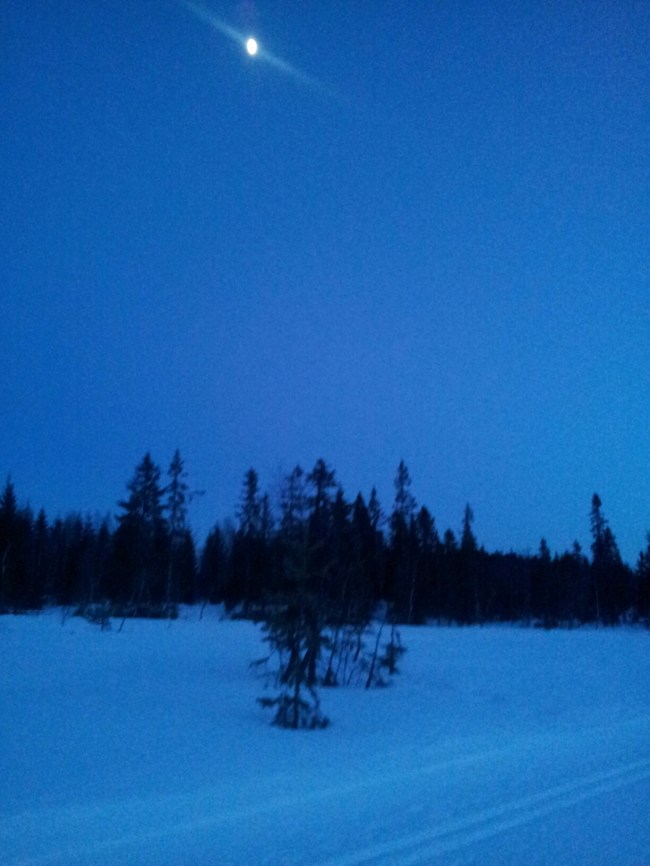
Schoutbynacht has been xc-skiing tonight. Actually, the picture was taken a few days ago, so tonight the moon was even larger. No need to light the headlight, which broke anyway when I had a drink of water and ripped the cord.

Image

This year spring is late in Norway, and so the snow is amazing for this time of year – dry powder. Normally by now it would be all crystallised by the constant oscillation between daytime sunshine and nights with minus five, six, ten. Instead, the snow is still dry and quite clean, not full of pine needles and bark. So conditions are great for classic style XC using normal wax – blue extra, for instance. Plenty of grip.

So I got out and hit the snow at 8pm when the last daylight was receding – just a faint stripe over the treetops to the north west. One other car in the car-park, and over one hour and forty minutes I saw two people, none of whom returned my greeting, and one dog, which barked with a certain amount of enthusiasm and no ill intent from what I could see. No moose, either, though I must say I was on the look-out. There are plenty in the woods here, I have met them twice, and while they are generally no trouble, they are HUGE, and if they decide to go for you, you better get outta there. So, no elk tonight. Just quiet trees and moonlight filtering down. Makes for a slightly spooky atmosphere, one you can break or spoil by lighting the super mega LED-light that you have on your head. But I didn´t, preferring to go by moonlight. This also sharpens, and by a lot, your sensation of skiing. Your perceptions shift from sight to balance, you start to feel what the body is doing, the pressure of your feet in the shoes, your position on the skis, the jolt transmitted back up your body as you kick the ski down. The smell of pine trees and snow. You get closer to nature. The root of a fallen tree with snow on it towers up ahead looking like a human shape. A shiver runs down your spine. Then you see the moss, the tiny roots, the shape changes into a tree-root shape. Small wonder trolls are popular in Norway. The forest is full of them.

Speed is also higher in the dark. It´s not really, but it feels it, which is more satisfying. Speed, the sensation of speed, is central to skiing. That, and the feeling of power and control. Power, as you thrust yourself forward on the slippery surface; control when you zoom down a slope at speeds exceeding 40 km/h on thin skis and manage to stay upright, clear the curve that comes up ahead, and make it through until things quieten down, the slope decreases, wow, made it!

My plan was to make it to Mikkelsbånn, but I don´t really know where that is, so I turned back when I thought I had come far enough. I drank some water, listened to a plane receding into the distance, verified that the headlight wire was beyond immediate repair, then set course for home, and discovered that it was almost all downhill and a fair bit quicker than coming up.

And I started to think how skiing is a constant element in my life. I remember my skis like I remember my bikes, with the exception of my first skis. There is the photo where I am 4-5 years old, on skis. Those I don´t remember. But the next pair, wooden, Åsnes, with a big Å on the tip – yes. The sole had to be made impermeable by smearing it with a tar-like substance, much like boats in the old days. Failing that, in wet conditions they would ice up like nobody´s business. This tar was also quite flammable, and I have this picture in my head of a common occurrence: when applying sticky wax for icy snow – klister – people would sometimes use a gas flame to heat the damn stuff and make it more malleable, and inevitably all the chemicals would catch fire. Nice blue flames until they petered out on their own accord.

The next image that presents itself is of my Åsnes skis being loaded onto the train in Bergen. How we got to the train station I cannot remember. With my dad it was often a case of being somewhat late – but in any case, the skis were surrendered to the cargo handlers, and equipped with labels. I remember paper stickers that were moistened and attached to the skis, stating the destination, and cardboard labels with a metal-reinforced hole where a steel wire was inserted in order to attach it to the skis, the poles, or other items of luggage. The poles! They were made of bamboo! Sounds like the Middle ages, but we´re in the late 70s.

Then we got on the train. The compartment was hot, the chairs were deep and comfy with green, plush upholstery. They swivelled, so you could make everyone face in the direction of travel. You pressed a pedal, and the whole two-seater could be flung through 180 degrees – clack! Clack! Clack! You sank into those chairs, you did not sit on top of them. They were great. And the train pulled out of the station and into the first of a million tunnels dug by grimy-faced rallars all those years ago. Narrow, black, wet tunnels. It seemed a miracle the train fit inside it. But it always did, and we with it.

The trolley came down the aisle, and maybe we got a bottle of Solo. Sticky, sugary, and ultimately nauseating as the train snaked along the mountainside before starting the climb to 1222 meters above sea level. Relief may have come from the water flasks, one of which was available at either end of the car, which by the way, was divided by two central glass doors that divided smokers from non-smokers. The water flask was made of glass, with a narrow neck, and was filled with tepid, lifeless water. Next to it was a stack of wax-paper cups. These were tiny and rather ingenious, having been fashioned from a single circular sheet of wax paper folded  into a cup shape. By pulling along the edges you could return the cup to its flat origins, and colour it. Thus passed a half hour. Many more remained until we reached our destination, late in the evening.

We stumbled out of the train, down the steep steps to the platform, snow-covered and lit up by yellow lamps. A cold dry wind would be howling in from some frozen mountain lake, and the train was a sight! The dry snow was like comet´s halo around it at speed, and this snow clung to every nook and cranny, and even to the bare metal, giving the train a heroic appearance. This was no ordinary journey! This was a fight with the elements! At the front, the locomotive had snow all over its plough and the metal grid protecting the nose. The bellows between the cars were all snowed up! Snow everywhere. The train just blasted through, or so it seemed to me, with a mighty mechanical force.

We hurried off the platform, walked the few hundred yards to the hotel, how I longed go get into that warm hotel lobby with its reindeer antlers, reindeer hides, thick slate tiles on the floor, Kvikk Lunsj and Melkesjokolade on display in the reception together with today´s paper from Oslo. Check in, collect the keys to the room. A normal key attached to a huge metal keyring. It was a roughly t-shaped piece of heavy metal – brass? The bar on the T was circular and padded externally by a rubber ring. On the surface of the circle the room number was stamped in black. There was little chance of carrying this key home inadvertently! Each key nestled in its pigeonhole in the reception, and all we had to do was ask for it whenever we needed to go the room to fetch something.

Finally we got to the hotel room with its strange smells of carpet and detergent, its starched white bedclothes, cool to the initial touch, then warm, so warm that sleep came instantly, even if by now we may have been a little bit excited.

And the next day would break with a light breeze, a blue sky, and a few degrees below zero, and we would equip ourselves with a packed lunch and a thermos flask with cocoa and launch ourselves on the newly-prepared tracks that fell away from the hotel down to the frozen lake, traversing it in a straight line like yesterday´s train tracks.

Tits & Clits (Stephen Jay Gould in memoriam)

Schoutbynacht is a big fan of the late Stephen Jay Gould´s popular writings.

One of Gould´s essays is called “Male nipples and clitoral ripples”, since his wife thought the more catchy “clits & tits” was a bit too much. The essay is about economy of genetic description, and how the architecture of man and woman is very similar. This explains why men have nipples, even if they don´t serve a purpose. The description is there in  our genes, which is much easier to “do” than to delete the entire organ. The difference is that  the milk glands do not develop in males. Similarly, our genitals are very similar at an early stage of life, and then mature along different paths. To make a long story short, the penis corresponds to the clit, and they have very similar structures, and in particular, are connected to the brain by a huge number of nerves. Basically, the clit is the main source of orgasm in females, which is a bit of a pity since it does not get much stimulation in normal intercourse. Presumably Gould´s wife benefited from his insights into the female anatomy, an insight Gould must have shared with the manufacturers of battery-powered vibrators. Vigorous stimulation of the clit is the key to success. Which implies that in addition to intercourse, a separate phase of love-making is called for, whose focus is solely to bring the female to climax.

There are articles that describe the clit in more detail – in particular, it turns out to have a large hidden structure under the skin, so to speak, which probably explains why intercourse in itself is also pleasurable, and can make a woman orgasm from the inside. Gould did not write about this, but you can explore it yourself.

To sum up, the old “wham bang thank you ma´m” just does not cut it. To love a woman properly takes more than that.