Masters of the air and the Luftwaffe war diaries

Masters of the Air is out on Apple TV or similar, and for those of us who saw “Memphis Belle” when it came out, there may not be that much that is new. Young men and boys flying into storms of steel, death and gore and destruction – and if you’re lucky, a couple of years in STALAG LUFT. Some 40.000 lost their lives if memory serves me right.

Opposing them were the Luftwaffe. In the course of this battle the Luftwaffe was destroyed. Its strength in the West peaked sometime in mid 1943, and by March 1944 it was broken. The factories were full of brand new fighters, but there were not enough pilots to fly them – they had been killed ( it is worth remembering that the experience for the young German pilots was equally desperate, and they died in droves, 70.000 +)
By the autumn of 1944 there was no fuel for the planes (see below) and those that flew were utterly outnumbered. The source for this is “The Luftwaffe War Diaries” (1964) by Cajus Becker, which covers the entire war and devotes a fair amount of space to the air war over Germany. It’s also worth noting how much of Luftwaffe’s strength was ground down in the East (which we always ignore), and also in the South: Germany was fighting on too many fronts.

Very roughly, the British learned early in the war that the undefended bomber would get shot down. They switched to night time bombing and “area attacks” on civilian targets, most infamously Dresden in February 1945, but Hamburg, Nürnberg, München, Berlin etc were all bombed and reduced to rubble to varying degrees. Civilian death toll is disputed, but easily exceeds half a million. The impact on German morale and war effort was small. Despite flying by night, losses were heavy to Luftwaffe night fighters and flak.

The Americans started out by ignoring the British warnings, believing their B-17s and B-24s with their large number of guns would get through without incurring terrible losses. They were proved wrong throughout 1943, and only when the P-51 Mustang took to the skies over Europe in early 1944 were they able to conduct bombing with “reasonable” losses, and conducted raids with 1000 bombers (!). The US Air Force was then able to devastate the aircraft factories, as they had also been doing in 1943 (e.g. the famous and bloody raid on Schweinfurt), but this did not reduce German aircraft output… the factories just dispersed, and a record 25.000 aircraft were produced in 1944 (!).

Then in the autumn of 1944 the US finally concentrated on the oil supply, and this had an immediate and enormous effect on the ability of Germany to fight. They should have done it much sooner. Albert Speer, 1945: “… The American’s attacks, which followed a definite system of assault on industrial targets, were by far the most dangerous. It was in fact these attacks which caused the breakdown of the German armaments industry. The attacks on the chemical industry would have sufficed, without the impact of purely military events, to render Germany defenceless”.

If you’d rather just read a book, try Serenade to the Big bird ( review ) which is very poetic and pacifist – though the author was a pilot who eventually died fighting.

Palestine 1900-1940 Eugene Rogan

Update July 2024:
I realize I have left out one of the key insights – a simple number, namely 400.000. On the eve of WWII the number of Jews of European descent in Palestine was 400.000. This had risen to 650.000 by 1948. In other words, the entire Zionist society was for all intents and purposes established before the Holocaust. Yet we are told, time and time again, that Israel was a result of the Holocaust. That is false. Israel was already a reality, created by the dual forces of Zionism and British imperialism; the latter tried to maintain its foothold in the Middle East, and therefore supported Zionism. The Balfour declaration was one of pure self-interest.
From the outset, the main thrust of Zionism, as embodied by Vladimir ‘Zeev’ Jabotinsky, explicitly rejected any common ground with the Arabs. The new state was to be for Jews only. And so it was. No effort was made to create a common society.

—————————————-

The following are excerpts from Eugene Rogan’s “The Arabs – A History” 2009-2011
Do buy the book, and read it. The beginning is a bit heavy, then it picks up pace.

p 245 “The British mandate in Palestine was doomed from the outset. The terms of the Balfour Declaration were written into the preamble of the mandatory instrument issued by the League of Nations to formalize Britain’s position in Palestine. Unlike all of the other postwar mandates, in which a great power was charged with establishing the instruments of self-rule in a newly emerging state, the British in Palestine were required to establish both a viable state from among the indigenous people of the land and a national home for the Jews of the world.”

“The Balfour Declaration was a formula for communal conflict. Given Palestine’s very limited resources, there simply was no way to establish a national home for the Jewish people in Palestine without prejudice to civil and religious rights of the existing non-Jewish communities in Palestine.”

p 245 “Palestine was a new country in an ancient land, cobbled together from parts of different Ottoman provinces to suit imperial convenience. The Palestine mandate originally spanned the Jordan river and stretched from the Mediterranean to the frontiers of Iraq through the vast, inhospitable desert territory. In 1923 the lands to the east of the Jordan were formally detached from the Palestine mandate to form a separate state of Transjordan under Amir Abdullah’s rule. The British also ceded a part of the Golan Heights to the French mandate in Syria in 1923, by which point Palestine was a country smaller than Belgium, roughly the size of the state of Maryland.”

Some population statistics: late 1900: 85% Muslim, 9% Christian, 3% Jewish. The figure is given as 24000, which would make the entire population 800.000. By 1914 the number of Jews had risen to 85.000 due to immigration. In this period, the indigenous population was beginning to oppose the immigration.

p247 “Jewish immigration and land purchase provoked growing tension in Palestine from the beginning of the mandate. Opposed to British rule and to the prospect of a Jewish national home in their midst, the Arab population viewed the expansion of the Jewish community as a direct threat to their political aspirations. Moreover, Jewish land purchase inevitably led to Arab farmers being displaced from the lands they had tilled as sharecroppers [tenant who gives part of the crop as rent to landlord], often for generations.”

By 1930 at least another 100.000 Jewish immigrants had arrived. Riots broke out and the British established commissions and wrote White Papers, and suggested measures to curb Jewish immigration. The Zionist lobbies in the UK successfully challenged and shut down these measures. After a few years of moderate immigration, a new wave peaked in 1935 with 62.000 new arrivals. The Jews now made up about a quarter of the population [McCarthy, “Population of Palestine”]

In 1936 the Arab Higher Committee called a general strike. The British sent 20.000 soldiers, and put pressure on their Arab allies [so-called] to influence the Palestinians to call off the strike- which they did. There followed, after a pause, a general, uncoordinated revolt from 1937 to 1939 which was violently quelled by the British who used military courts, house demolitions and concentration camps, or imprisonment without trial. Younger offenders [sic!] were flogged (whipped). The tally was 5000 Palestinians killed and 10.000 wounded or more. The Palestinians were broken. We are now at 1940, and the gates of hell are about to open in Europe. The British proposed a deal that neither Jews nor Arabs accepted, and Irgun and the Stern gang [Lehi ]declared Britain the enemy. Among their deeds were the 1946 bombing of the British headquarters in the King David hotel, and the assassination of Count Folke Bernadotte (1948), the man who had saved thousands from the camps at the end of the war.

We will leave the story here, but a short trip to Iraq is useful. Here, the British puppet prince was exiled to Transjordan in 1941 and pro-German Rashid Ali, who thought the Axis powers would win, came to power with the support of the army. He was later ousted by the British, and Baghdad descended into chaos.

p260 “It was the Jewish community of Baghdad that fell victim to the chaos after the fall of Rashid Ali’s government in 1941. Anti-British sentiment combined with hostility to the Zionist project in Palestine and German notions of anti-Semitism to produce a pogrom unprecedented in Arab history, known in Arabic as the Farhud. The Jewish community of Baghdad was large and highly assimilated into all levels of society – from the elites to the bazaars to the music halls, in which many of Iraq’s most celebrated performers were Jewish. Yet all of this was forgotten in two days of communal violence and bloodshed that claimed nearly 200 lives and left Jewish shops and houses robbed and gutted, before the British authorities decided to enter the city and restore order.”

The Blue Arena by Bob Spurdle

This pilot’s memoir was first published in 1986 by Goodall ; reissued 2023 by crecy.co.uk

“Off the coast of Scotland, a Dornier 17 Flying Pencil bomber on reconnaissance, circled round and round the convoy. Where were our fighters? Every now and then again a destroyer let off a few shots, forcing Jerry to keep his distance. Long after it had left, a deep soft purring sound brought us out on deck and there, in the crystal sunlight, I saw my first Spitfire. A strange thing happened. My palms sweated and my heart thumped; breathing hard, I followed the streamlined beauty with longing eyes. It was a form of love at first sight and one which never left me.”

This quote is typical of the style of the book, which I certainly recommend. You are out there flying, peering through sights, watching the exhaust turn brown as you apply emergency war power on the Merlin, the flak coming up, the planes crashing, etc. If you’ve read an account or two, what does this one add? A couple of things. The author knows how to carry a grudge, and he is quite scathing about the Americans and the New Zealand Air Force, despite being a Kiwi himself. Maybe he identifies more as British?

The author also consumes an amazing amount of alcohol, even at nights when there will be combat missions the day after. This drinking habit one also glimpses in Clostermann’s account and others: the pain of seeing comrades fail to return is drowned out by booze. The drinking goes on and on… there are women, too. Not surprising, but normally left out of these accounts. Here, they are left in, shall we say, at least to some extent. Another distinguishing feature is the amount of killing that takes place. It’s clear that the author loses respect for human life, and the low-level strafing in the autumn of 1944, flying the formidable Tempest, is a bloody and dangerous affair. A bumbling 109 is “dispatched” by the superior Tempest.

Killing is part of it, almost cherished. Fallen comrades are avenged. In one moving scene Spurdle visits the mother of his best friend whom he watched die in his Spit, in her apartment in Paris. He assures her that her son died a swift and painless death.

Bob has a wide set of experiences, at one point he is “flying” catapult-Hurricanes on merchant vessels to protect convoys against the FW-200, but never launches on his round trip to New York, complete with drinking spree. Then he is on the ground, guiding ground-attacks at the crossing of the Rhine. Then back in the air.

At one point, while in Holland, he commandeers a Spit, jumps in, flies to England and spends a week-end with his wife – recently married – before flying back to continue fighting.

The end is quite bitter. Denied a career in the New Zealand Air Force by careerists who have never fired their guns in anger, he resolves never to fly again. What would be the point, he thinks to himself, and embarks on the rest of his life.

Skipet går videre Nordahl Grieg

“Et skib kommer ind paa havnen og stanser en stund paa sin vei fra hav til hav. Ilden slukner på dørken, maskinen stamper i staa med sine oljeglinsende stempler, og propellen slaar et krampaktig, skumhvitt slag som en døende fisk med spolen. Et siste grep om rattet og skibet svinger langsomt ind mot kaien. Mange trosser av staal og hamp tjorer det til land og gir det i jordens og menneskenes vold.”

—-

“Det glitrer av haardt solskin gjennem den kalle blæst mens “Mignon” stamper seg nedover Kanalen. Maakene stiger og falder med lyn under vingene omkring i den tynde, blekblaa luft. .. Et stykke forut svulmer en femmastret bark med veldige, sorte seil frem gennem den tidlige kveld. Det skimrer av kraakesølv over bølgene og langt inde lyser en irrgrrøn stripe av England i solnedgangen.”

Skibet gaar videre”, Nordahl Grieg, 1924.

Anbefales.

The Allure of battle Cathall J Nolan

(Oxford University Press, 2017)

I have ploughed through the 580 or so pages of Cathall J Nolan’s (CJN) magnum opus (big work, or maybe oeuvre?). It does have too many pages, but it does have a message or two.

Let’s look at the messages and the (repetitive) contents of the book.

The book takes us from Hannibal’s victory at Cannae against the Romans to the final defeat of the Japanese in WWII. On the way we pass by medieval battles, the 100-years war, the Napoleonic era (the description of the march on Moscow is a great read), and then the growth of the Prussian state, its conquest of the rest of Germany, and how this in part led to WWI which in turn led into WWII after a brief interlude. Left out of the narrative is almost everything that did not happen in a narrow geographical area from France to Moscow, or around Japan. Crimea gets a look in, but that’s about it; and this war was more important than we realize. The entire imperialist era is only lightly touched on, as the source of British and French wealth and power – but not as a motivator for Prussia to become a Weltmacht. Where that motivation came from, we are not told. Nor where Japan’s imperial ambition was born.

CJN repeats himself a lot. Each main chapter, with titles like “Battle annihilated” and “Battle decisive”, starts with a brief recap. He also likes to repeat certain words, like “feldgrau” and “Kesselslacht”, The mood of the writing varies a bit, from disillusioned observations of human tendency to kill each other and quite angry characterizations of the short-sighedness and blindness of especially German military historians, to short passages taking us into the midst of battle, with humans reduced to a bloody pulp and skulls smashed under horse’s hooves. Clearly this was written over a long period, and maybe it incorporates material that was written for different contexts along the way.

I also missed more nuanced descriptions of the Nazi ideology. There are several references to race war (rassenkrieg) but none to Lebensraum or Drang nach Osten. He does include Polish losses, though (6 million of a prewar population of less than 40; of which 3 million where Jews), and sketches the internal divisions in Nazi Germany’s leadership – the mutual mistrust between nazis and the old “Prussian guard”.

Despite these misgivings, it’s a good read, hard to put down. The repetitions have a suggestive, trance-inducing quality.

What are the messages? Let’s list a few.

Wars are never won by single battles. That is the main message, literally hammered home throughout the book. Rather, wars are won by the mutual wearing down of the combatants until one of them, often both, are emptied of strength; or in the old days, before total war, when armies were small ( < 100.000) they decide that enough is enough and a peace treaty is signed. Attrition is the name of the game.

The second message is that too many have believed in the battle genius, of which Moltke and Napoleon are often cited as examples. And Nelson. These were tactical geniuses, all right, but in the end, it’s the strategic depth that matters. Everyone ganged up on Napoleon in the end because of the strategic picture, and that was the end. German and Japanese military strategists focused on the decisive battle as a way to win war – also because, since neither country had the strategic depth to win a war of attrition, that was the only way they could win – so they tried that. And failed, and failed, and failed, causing untold misery in the process. In both cases CJN portrays elites steeped in an ideology of moral and combat superiority that made them blind to the real strength of their foes.

In the case of Japan, CJN describes a highly dysfunctional relationship between the army, which wanted to fight Russia in the north, and the Navy, which wanted to fight the islands and colonies in the south (and hence the Europeans). He also describes internal disobedience in the army, with individual generals starting wars more or less on their own.The same accusation is levelled at German and French generals who attacked (and got their men slaughtered) when they should have waited.

CJN could be accused of some fairly fixed ideas. In addition to the fixation with other people’s fixation with battle, he seems to hold the French in high regard, the Italians in low regard, and the Germans and Japanese in low regard also, albeit of a different kind. Their wounded imperial ambitions drive them to war again and again, both of them infused with a martial spirit that leads to death and destruction of their own peoples and others that they cross. This sounds a lot like the old stereotypes, doesn’t it, but I find it believable in CJN’s account. And it is true that Hitler in his bunker said that the German people had failed and so did not deserve to live. It is also true that the Japanese fought till the end, in many cases this meant suicide rather than the dishonour of capture. In one quote in the book a British officer  says “if we are faced with 500 Japanese we have to kill 495 and then the rest commit suicide”. Germans and Japanese share the warrior, aggressive spirit where defensive ability and logistics are seen as unimportant. In a short war where you crush your enemy at once, there is no need for this. Below I will briefly recap this thesis in the optics of the First and Second World wars as fought by the German armies. |digression by me: The famous and much feared Zero, for instance, had zero (!) armour plating and no self-sealing tanks, which meant that a few hits would set it ablaze. This meant is was light and nimble in a dogfight. Low weight was mated to a relatively weak engine, and performance at altitude was nothing special. Much of the air war in the Pacific took place at medium altitudes, though, which is also why the P-38 Lightning could hold its own to some extent, while being outclassed at high altitude fighting in Europe.]

CJN does not have a lot to say about the UK or the rivalry between the UK and the US for world supremacy. Certainly the two powers switched roles after 1945, with the final cut coming at Suez in 1956. What opportunity on the world stage did FDR glimpse as he set the industrial juggernaut into full speed forward? CJN has nothing to say about US motivations at the strategic level, apart from the intent to destroy Japan completely – which is a strategic objective, of course. The crushing material might of the US war machine – 1000 ships at war’s end, 300.000 planes produced – makes it clear who was top dog by 1945. And still is..

CJN describes the war between Japan and China in the 30-ies going into WWII as far more extensive and bloody than I knew. Japan really was aggressive back then.

Returning to the message: if you want to go on the offensive, if you elect to go to war, you better have more strategic power than your opponent. Otherwise, you lose. Here the US is in a unique position with its enormous domestic resource base across all facets of war-making.

In the end, in both world wars, Germany was out-gunned and out-manned and it was all just a question of time, since the knock-out blow was never realistic – even Germany did succeed initially.

The outcome of the wars waged by the US since WWII also suggest that war as a political tool is losing its utility. But we could argue that threat of war still works, and maybe that threat has to backed by the odd war to show the risks of ignoring the threats.

Thanks to CJN for this major effort – which leaves me a little bit unsatisfied regarding the wider picture. But then, that was never his main topic.

About Schlieffen-plans and the world wars.

In the following I refer to the book’s depiction of the main events.

WWI
German military planners feared a long war and planned for the short war to knock out the enemy. In 1914, this was about the speed of mobilization where trains had a central role. Why trains? Because the alternative to trains was horses and boots, this was before the petrol engine (by 1918 there were lots of petrol engined trucks). Once past the railheads, progress was slow. Hence the central role of trains. CJN says that in the summer of 1914 Germany wrote a blank check to a weakened Vienna which went to war with Serbia – presumably to tighten the grip on the Balkans and keep its empire intact. Once that was done, Germany was at war, too, and then the chain reaction was set in motion. Everybody thought the war would be over by Christmas: the Germans planned to swing through Belgium and encircle the French. This failed at the first Battle of the Marne, there was the famous race to the sea, and then the trenches were established. There was war in the East, bloody enough, and here the Russians eventually sued for peace, there was revolution, etc. 

What happened in the end? After the insane bloodbaths of Verdun and Somme, the technological development and the grinding down of the Germans led to changes in the battles. The Allies learned how to break through the trenches using tanks (they controlled the air), planes and “shock troops”, and how to follow up once a hole had been punched – just as critical. CJN writes that Germany was totally exhausted by the autumn of 1918, and that’s why they had to capitulate. However, the myth of the legend of the knife in the back, the Dolchstosslegende obscured the military defeat and hence led to the next war, since the idea that Germany was never defeated, and hence would win with the right leadership, took hold.

How was WWII fought? 

CJN writes that the French feared and prepared for invasion by building the Maginot line. This would force the Germans north through Belgium and the Netherlands. The Germans went through the Ardennes further south in a bold move, covering large distances with Panzer crews on drugs (CJN omits this). A feint to the north lured the British Expeditionary Force and the French into Belgium, and the German Panzers rushed to the sea south of them in defiance of Hitler’s orders, closing the bag around the BEF. All the while, heavy fighting went on. CJN does not mention this, but French losses according to Wikipedia were in excess of 100.000. If the tactical game had played out differently, the result might have been very different. The French had guns, tanks, planes and soldiers. But they lost; I shall have to re-read Strange Defeat by Marc Bloch.

First of all – why did the Nazis attack? According to CJN, Hitler did not want the UK to enter the war, and was dismayed when the attack on Poland caused the UK to declare war. The attack on France was presumably to neutralize one enemy in order to attack in the East, maybe laced with revenge?

An invasion of the UK was never a realistic prospect due to the mighty Royal Navy, which surely would have fought to the last man and wiped out any invasion fleet. CJN also says that the Nazi leadership never had a “major plan”. They took one battle at a time. Other historians might argue that Hitler’s real objectives lay in the East – where there was Lebensraum to be had. This is covered in “Most Dangerous Enemy” by Stephen Bungay – recommended

Toscana 2023

And so we went to Toscana – again. Third time in my life.

It’s a modern world this time, with AirBnB, wifi and 4G, Instagram and Snapchat. We were connected at all times, and though Whatsapp we could synchronize our moves even if spread across two or three vehicles. A friend of mine once drove across the US, two families in two cars, and they used walkie-talkies. Once, upon leaving a gas-station, a quick count over the walkie-talkie revealed that one child was in neither car…

You get off the plane and eventually find the car rental, confusingly sign-posted as always, and since I am a literal person, almost autistic at times, I don’t trust the signs and always end up in the wrong place. My VISA-card was unacceptable to the car-rental people, but we were saved by K and M possessing the right kinds of cards. We got our cars.

First stop was at a agriturismo just outside Orvieto, the clients were Italian, and the food was simple but good. As always the raw materials are so good. Italian food is better in Italy. We were back!

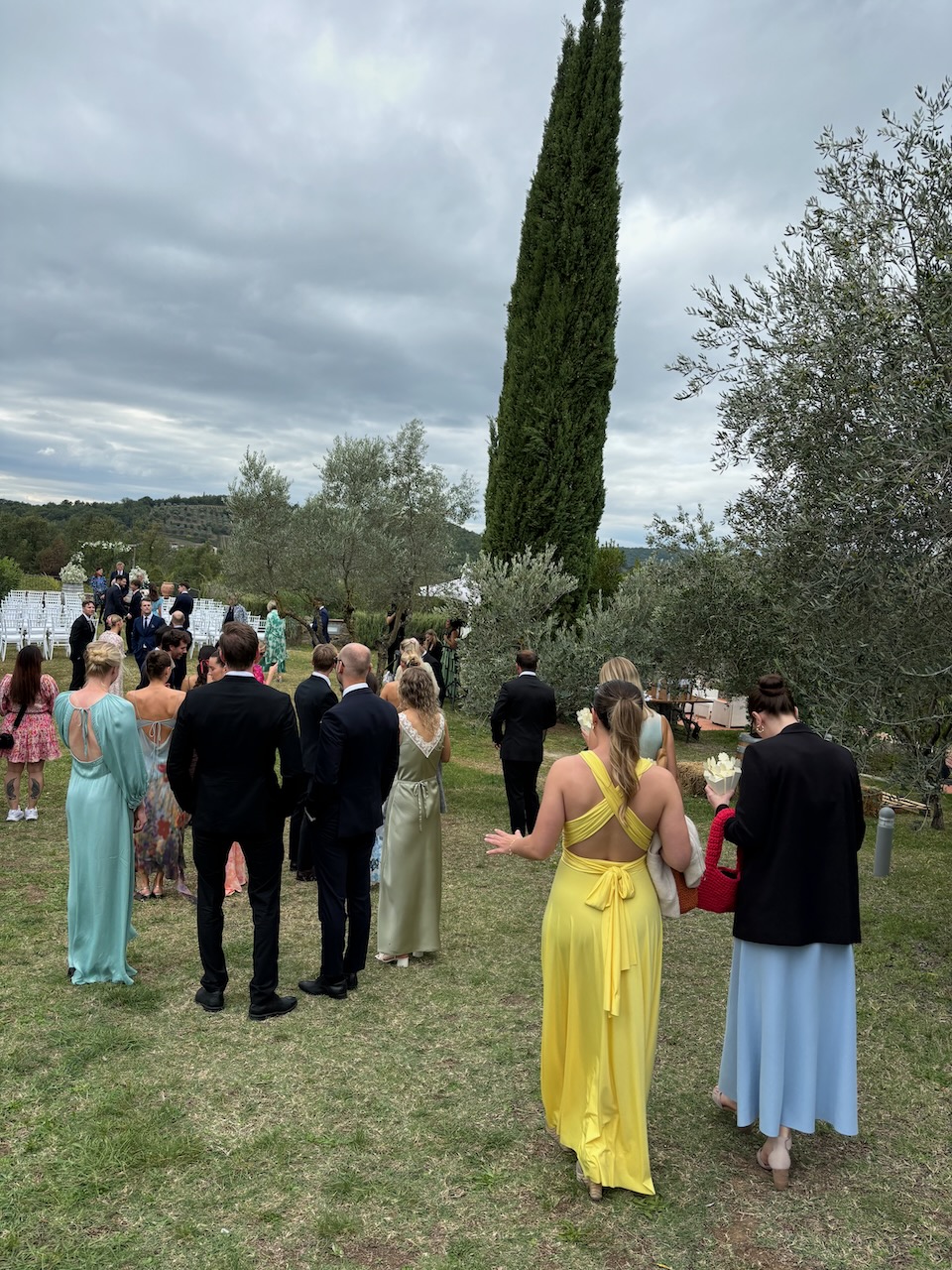
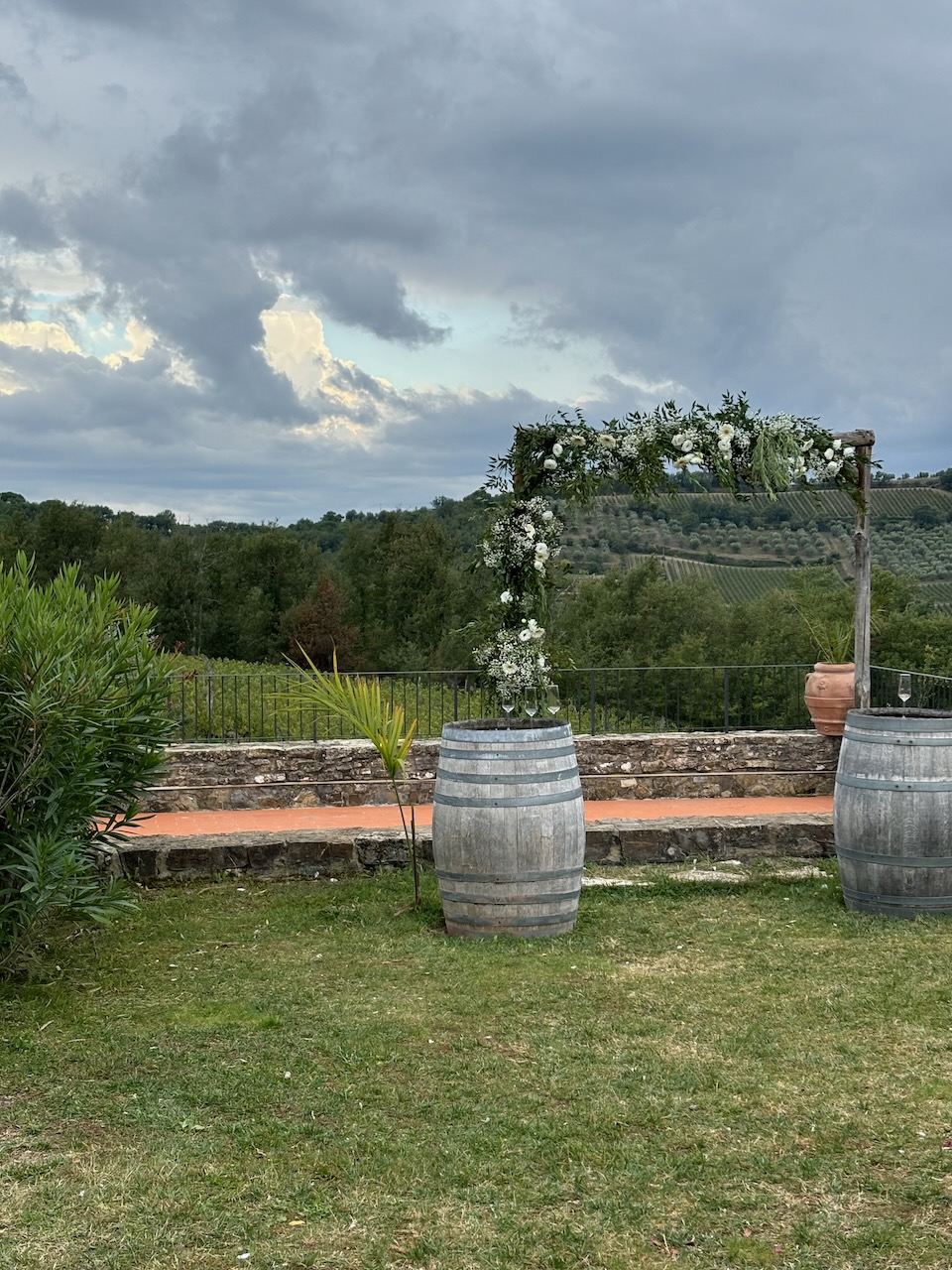
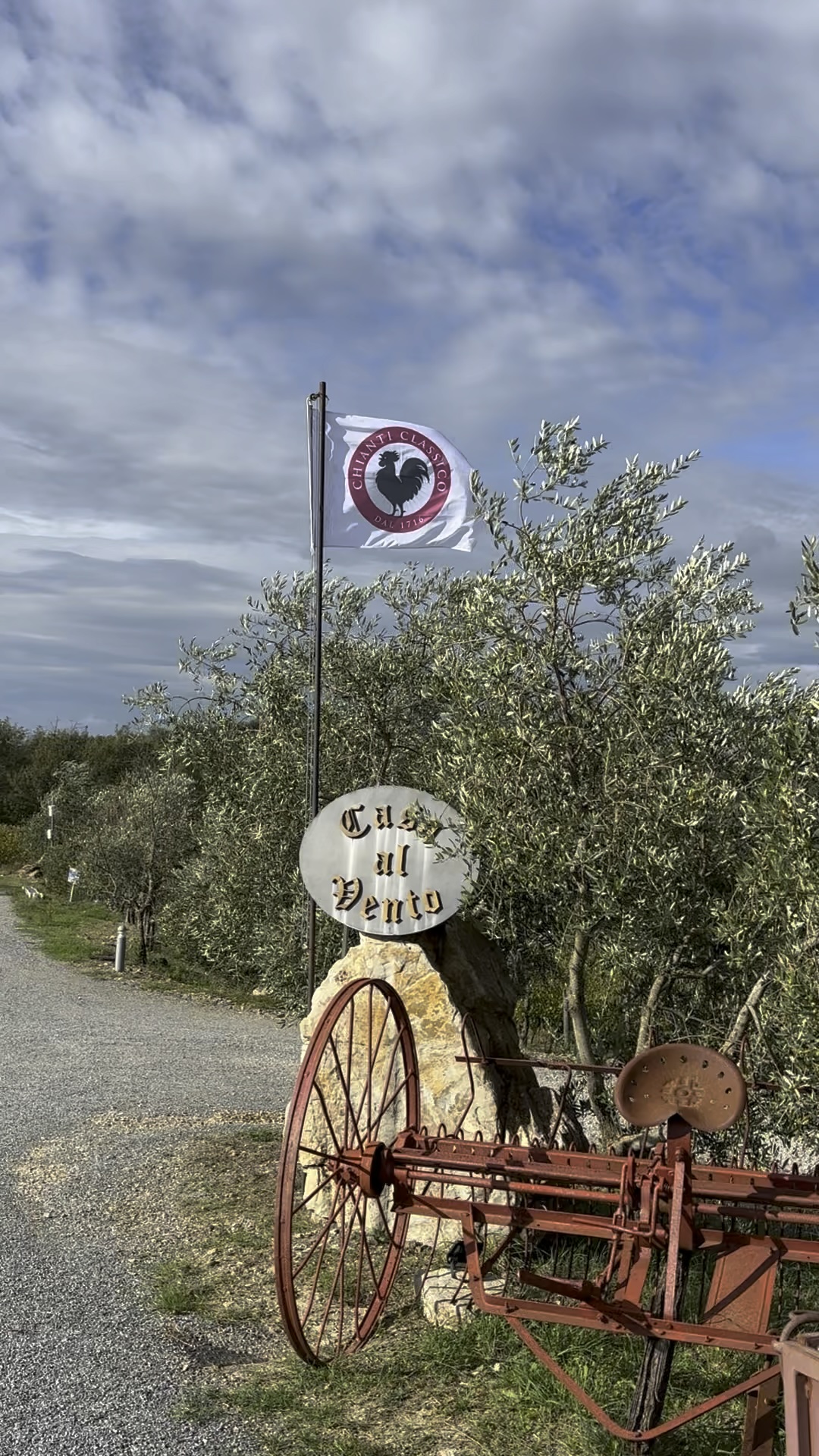
Our AirBnB was an old – probably ancient – farm on a hill close to Rigomagno. Four buildings and a pool in the middle of well-kept olive groves far from the maddening crowd. Beautifully redecorated, comfortable, friendly hosts. The weather was also lovely.

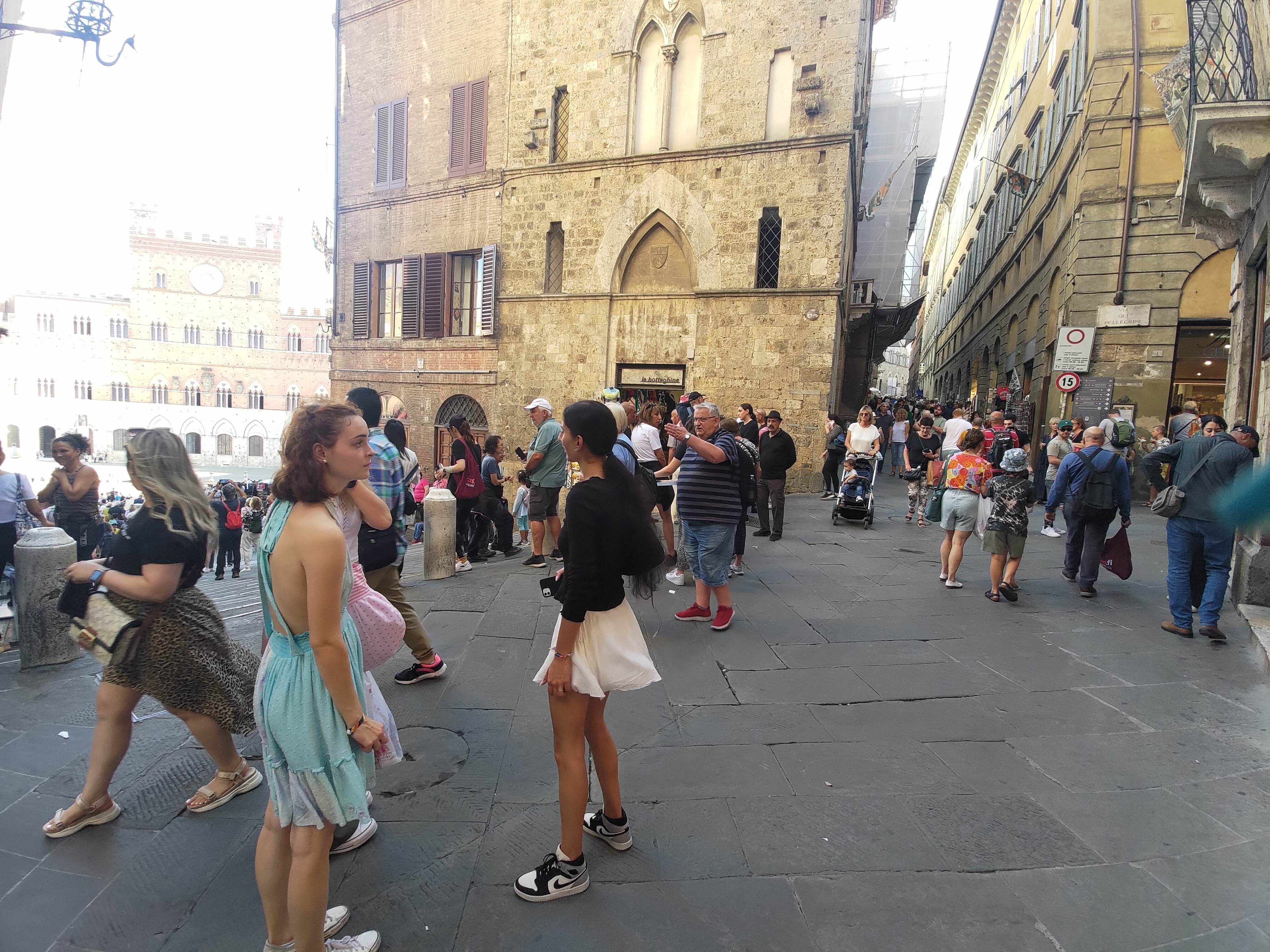
We saw Siena, Pienza, bits of Firenze, Cortona, and Roma. We took at quick look at lake Trasimeno from a deserted beach.

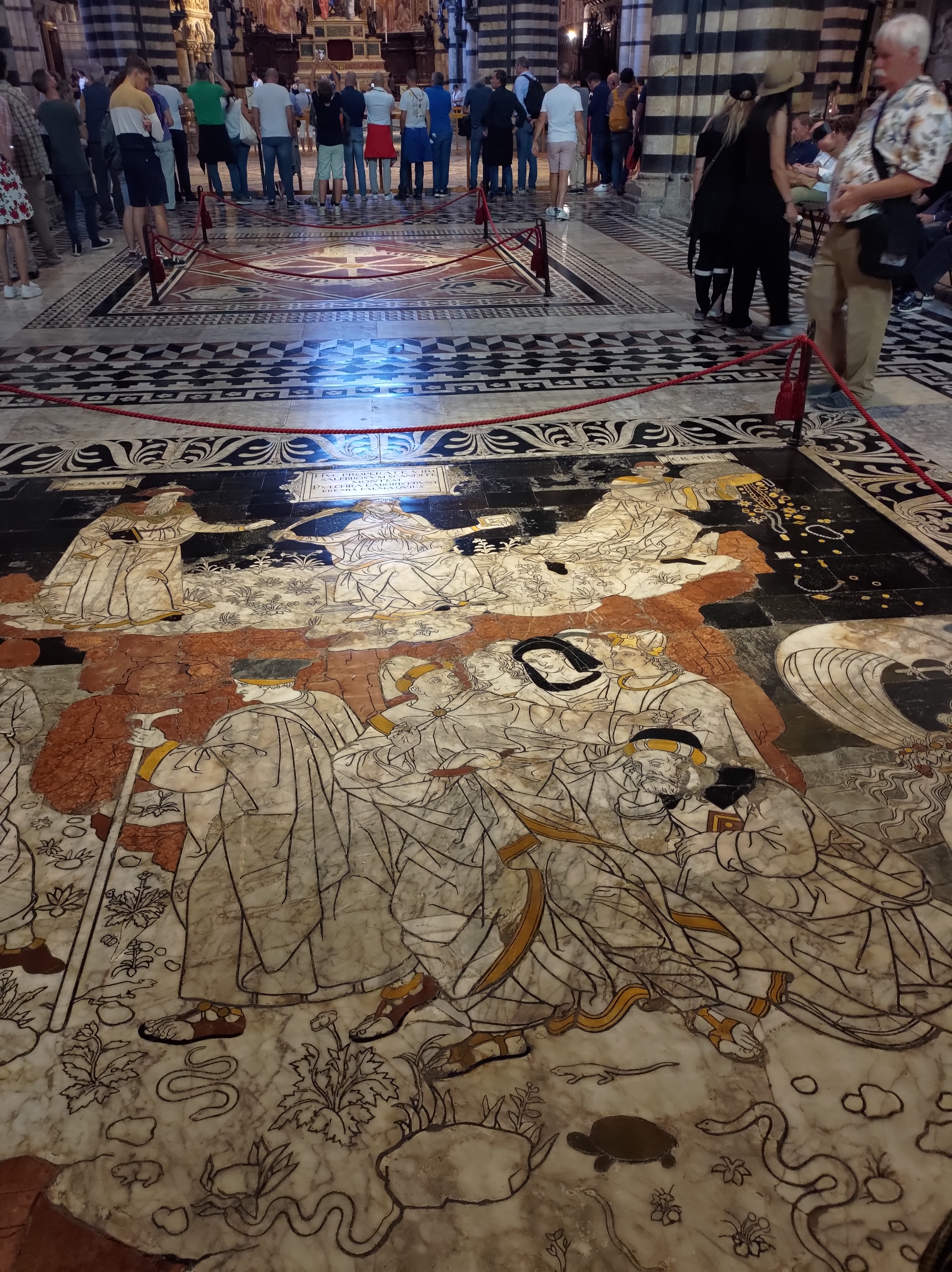
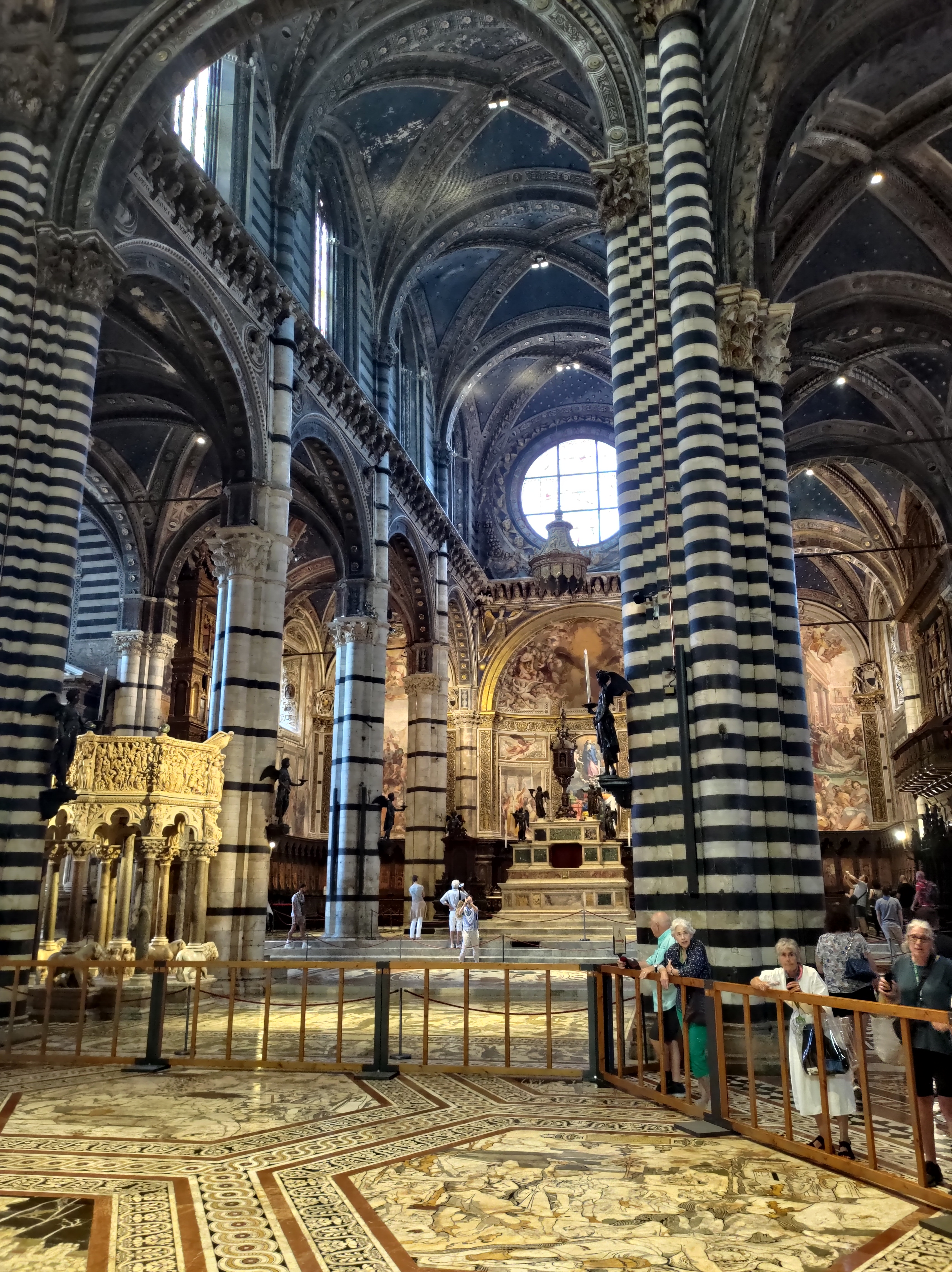
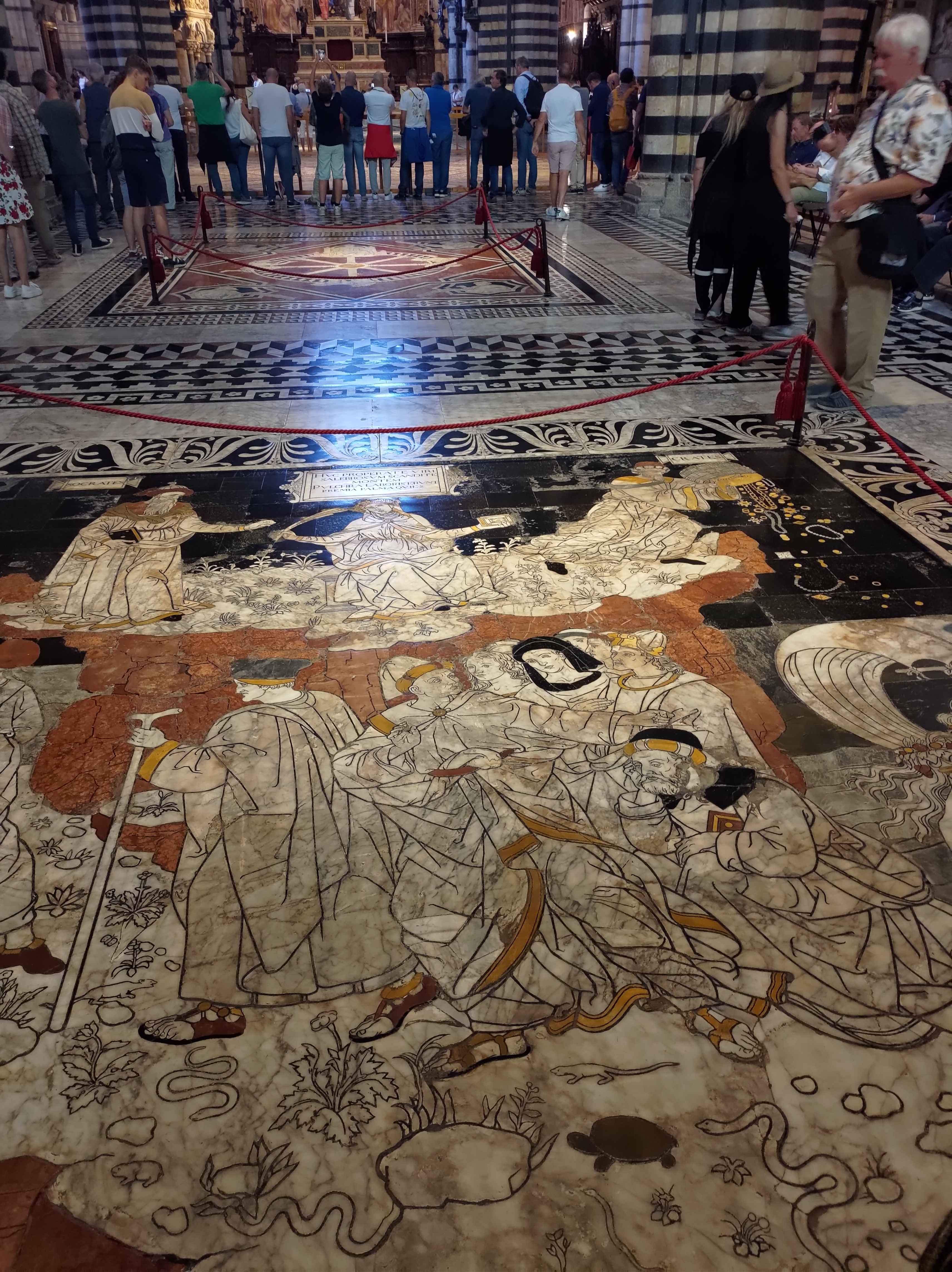
Standing in the main piazza in Firenze under the towering tower – that felt right. The interior of the Duomo in Siena is literally mind-boggling.

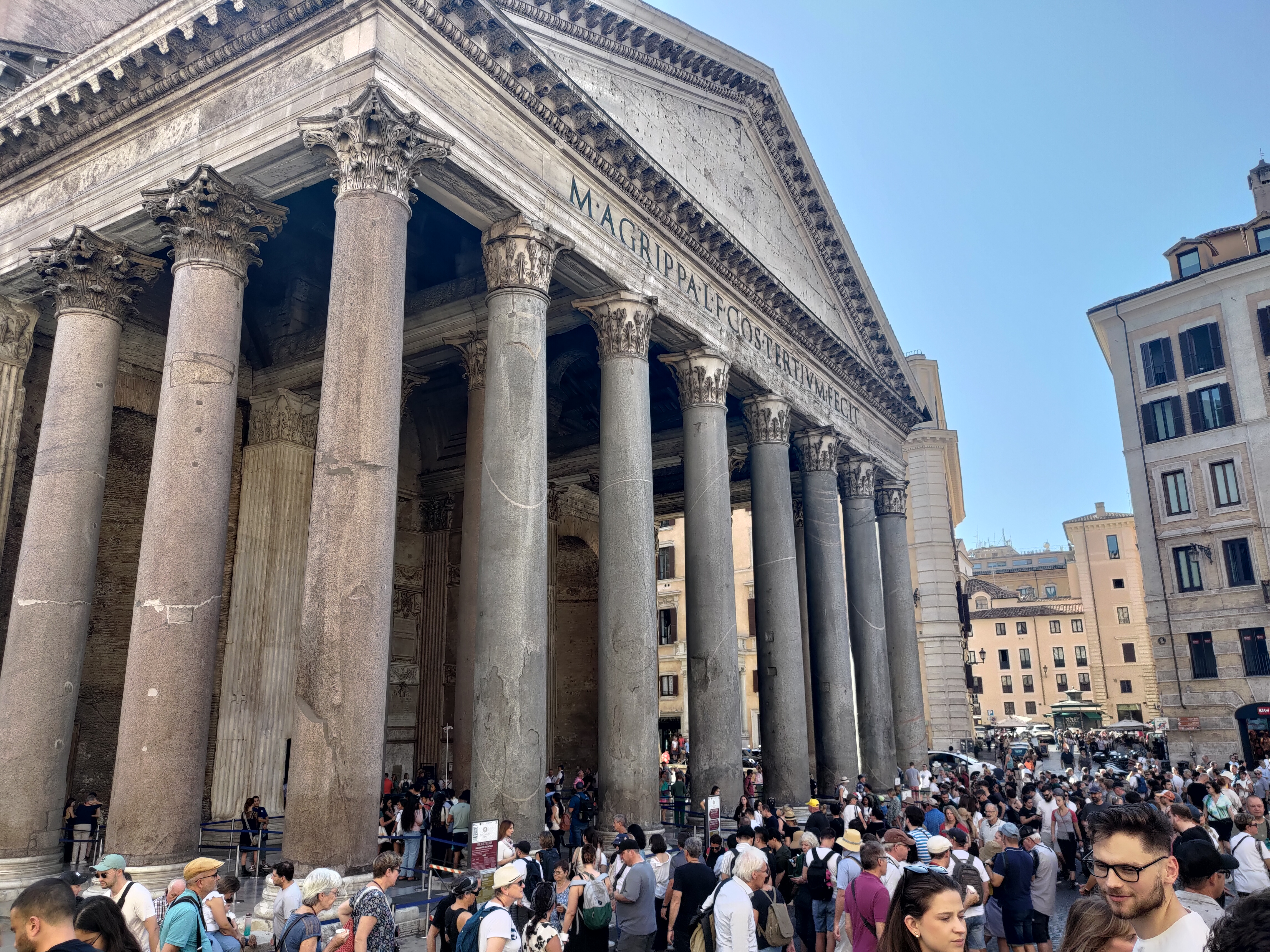
The number of tourists exceeded my expectations – also in Roma, where we spent a few hours before getting on the plane home.

Pantheon is always the icing on the cake.

War cemetery in Foiano della Chiana

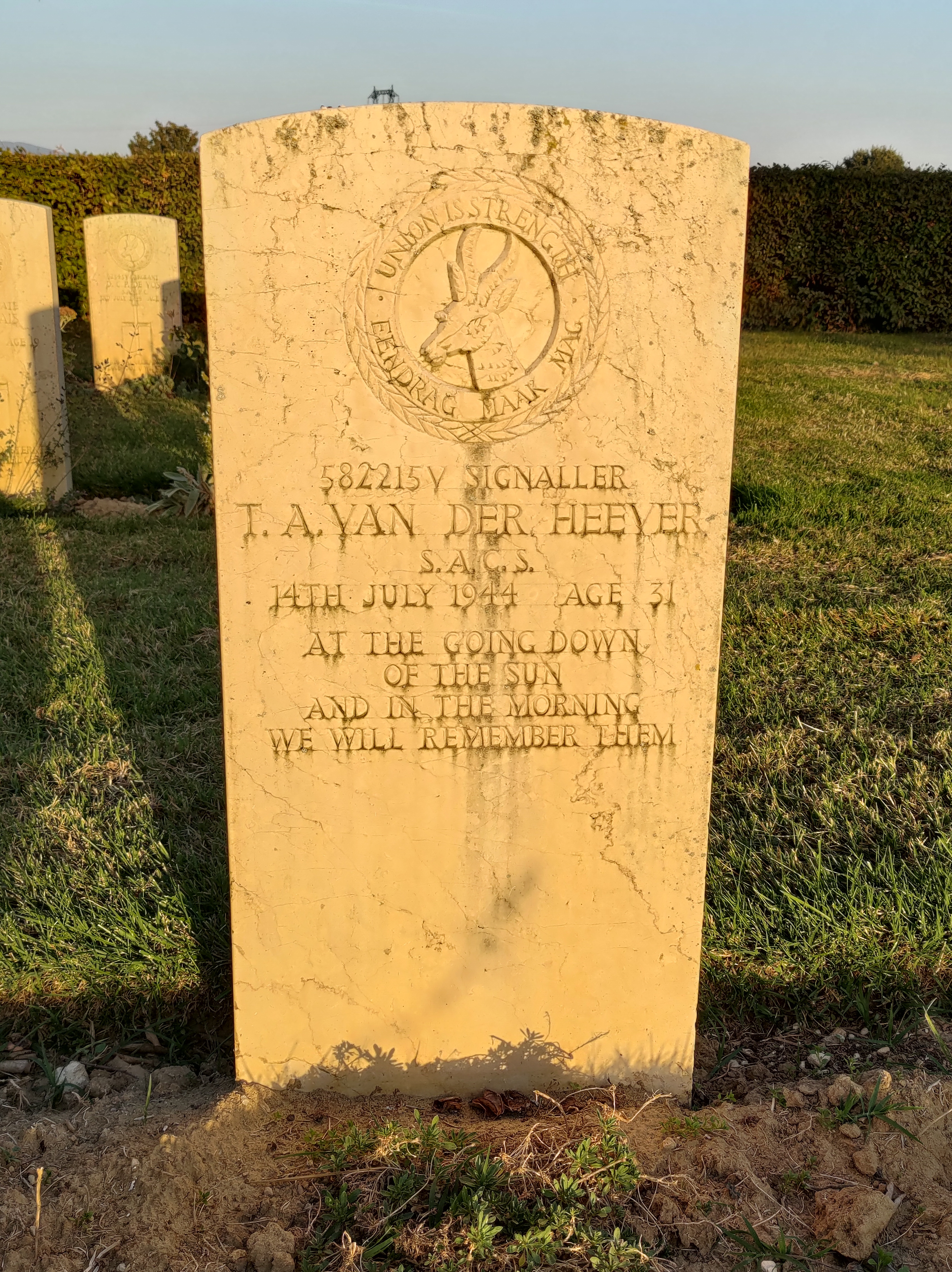
At the going down of the sun and in the morning we will remember them.

I am back. Last time was 19 years ago, and I wrote about it here. It’s in Norwegian, but you can run it through Google translate.

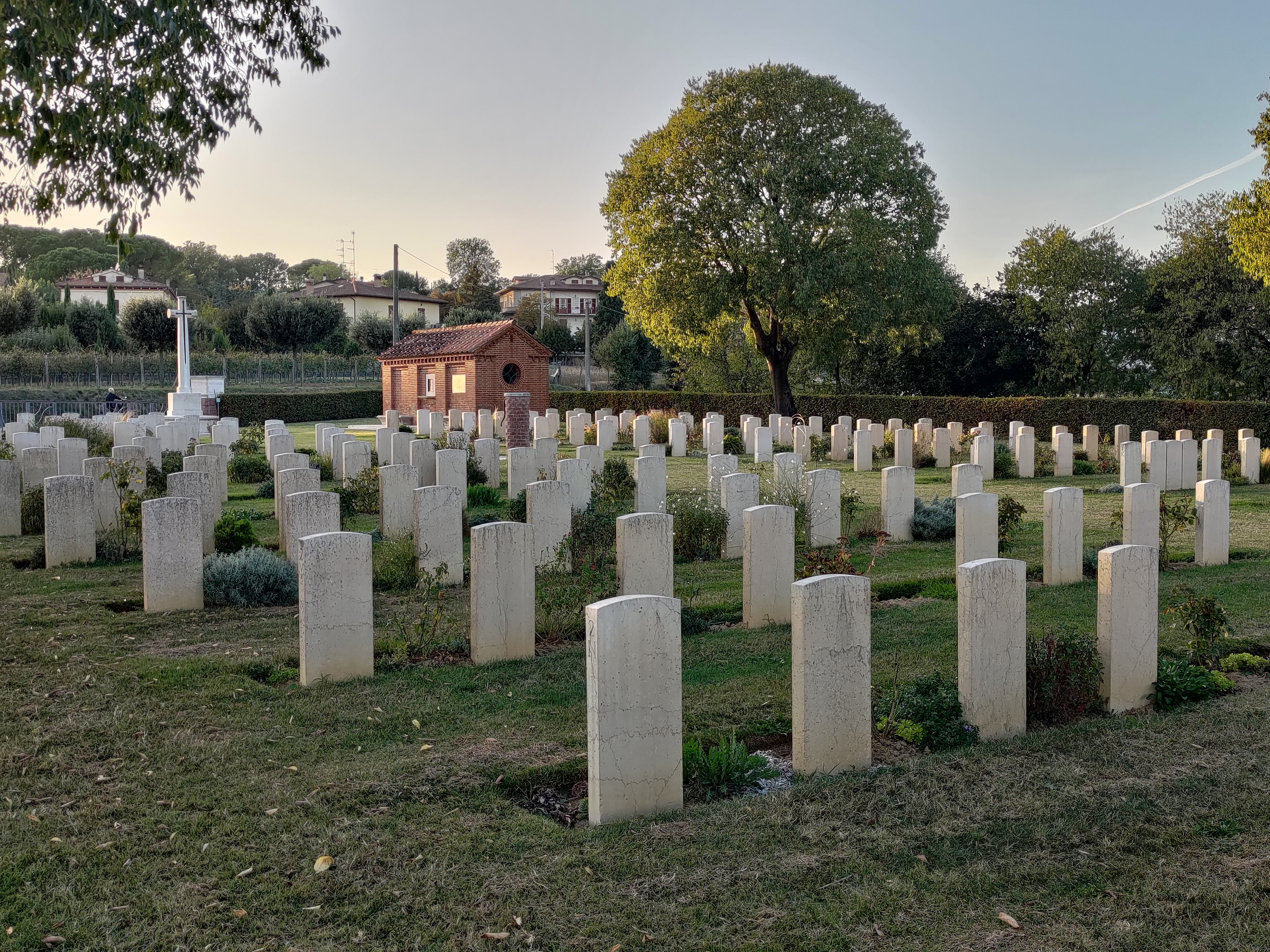
This time I used Google and Maps to find it, and they were not very helpful, but I found it on the second attempt. Last time it was entirely by chance that I saw the signpost as we drove past. It’s almost invisible, and the cemetery is also very small. Today it nestles between some fields, a football pitch and someone’s vegetable garden, where someone was tending their vegetables.

It looks a bit forlorn hidden away here in the midst of other people’s daily lives. Any cemetery is a shrine to lived lives, but a war cemetery is also a testament to lives cut short. Some of the men who were buried here were 19, many were in the mid 20-ies. Some were already fathers. Others were probably virgins. They number 256 in all, which is a neat number, 2 to the power of 8, or 16 by 16. 8 bits, if you like. No less than 66 were from South Africa. What compelled them to come here and die? Judging by their names, some where Boers.

I was less moved this time than last. Or was I? It was both good to be there again, and a bit anti-climactic. I had been there before, after all. It’s my secret part of Toscana.

While I was there my family went shopping at “Valdichiana Outlet Village”. It gets rather more visitors than this forgotten cemetery where someone’s relative is buried. There’s not much left of them now after all these years, but the lawn and the flower beds are immaculately kept. As you can tell from the photos, the sun was indeed going down when I was there.

In 2004 I did not bring my camera, but this time I took some photos. I had completely forgotten what it looked like, except the small house, which in my memory was at the far end of the cemetery. Here are the rest of the photos I took.

Here is the official page for the cemetery.

War now and then – Ukraina

I will try to sum up some impressions from various readings – everything from Le Monde via The Guardian and Aftenposten to Klassekamben ( Francesca Borri ), Foreign Affairs, Adam Tooze on substack, and a couple of books: D-day by the Swedes Tamelander and Zetterling, and World War I by Norman Foster. Plus various talking heads on Youtube. I find to my dismay that some of the people who share my view on the war are right-wing crackpots, like Scott Ritter. John Mearsheimer is clearly not a crackpot, but the press is busy sidelining him.

First, the outlook for Ukraina is bleak. It is unlikely that the frontier will move much. The summer of 2023 has passed and the offensive has not paid off. Otherwise our press would have been full of jubilant reports. It isn’t. Instead there is a steady drip of human-centred stories about the toll of war on both sides – e.g. Russian convicted murderers returning to their home town in far-flung corners of the Russian empire after having been cleansed by 6 months at the front… and Ukrainian wives and mothers searching for and finding the sad remains of their loved ones. We have learned about the minefields, thicker than anything seen before, the deep defenses, and the steady build-up of artillery on the Russian side.

The west is digging out F-16s, with photo-ops for everyone, with warnings from those that know what war is about: that a couple of fighter jets, or indeed tanks, on their own cannot change the course of a war. So, while these weapons may keep the Zelenskiy show on the road, back home he is blocking journalists and has never taken questions at home (Borri). In other words, he’s playing for time.

My take on this whole war requires two references to Greek mythology: Ikaros and Pyrrhos. Ukraine, like Ikaros, flew too close to the sun – Russia – believing that NATO (read: the US) would make them unassailable. And Zelenskiy’s victory is already Pyrrhic – the economy is in tatters and millions have fled; many will never come back. To sum up: if you talk the talk, you gotta walk the walk. Putin made it clear where the red line was. To cross it was foolish, or maybe foolhardy, and also unnecessary, and here we are. Look at it from Putin’s perspective: clearly he knew that the cost of war would be enormous on all fronts – yet he went to war. Clearly this was a non-negotiable point, and all the fluff about “Nazis” was simply for internal consumption. It is also likely he would have murdered Zelenskiy if he could, but that there was never a plan to invade all of Ukraina.

Going back in time, we all “know” what WWI was like, but one question is rarely answered: how did it end? I see two-three reasons in Foster’s book:
– the US entered the war with its huge resources
– Germany was running out of resources, so despite peace on the the Eastern front, Germany was less able to fight
– the tank, the light machine gun, better use of artillery, and the plane made it possible to break down trench defences, when these elements were used together (Foster).

The question is relevant, since the war in Ukraina is looking similar to WWI with its trench warfare, minefields, and seeming paralysis.

The end of WWI saw the introduction of the modern way to carry out an attack: air-launched munitions and ground artillery smash the defenders to bits, and then the tanks move in supported by mechanized infantry and more close air support. This is what we call blitz-krieg. This is also essentially what the US did in Desert Storm where they had complete control in the air and vastly superior mobile artillery.

To win you have to have more troops, more artillery, and supremacy in the air. And that is true even today. You also have to use the different “tools” together. As an example, the Afghan Army was trained to operate like the US, and that means dependence on air support. Once the US pulled out, the Afghan Army was left with a useless way to go into battle. The Afghan air force had no way of maintaining airworthiness on the highly advanced planes and helicopters left behind. This was only a part of it – the Army’s morale was low, and everyone realized the Taliban was going to win, so why waste your life. Why indeed. Let’s not forget that the Americans were foreigners and infidels, too, so working with them was treason, or close to it – but it was a paid job.

This type of battle requires close coordination, which is why we hear about “training” and “maturity” in the press. The tanks on their own are very vulnerable. Infantry on its own is vulnerable. The planes are vulnerable to “flak” – anti-aircraft fire, and to missiles. A quick glance at this list explains why the tank assault on Kiev failed: no infantry to support the tanks, no air-support (the Ruskies didn’t want to risk losing planes), and in the event, no logistical support. A tank without fuel is a useless – a death trap. This mode of battle requires both mindset, means, and training. The Germans were excellent at it throughout WWII – they gave their commanders at battalion level the authority to make decisions – the reasoning being that these knew best what the situation on the battlefield was. This is the opposite of the Russian mindset. NATO is probably a lot closer to the ways of the Wehrmacht. Tamelander writes that the Wehrmacht observed that when the Americans encountered resistance, they pulled back and called in air support. Makes sense if you’ve got it, because you save your own troops from destruction. This is how the US fought the Japanese, too, with enormous superiority in firepower they smashed the Japanese defences. And their cities…

Even in WWII, artillery was a big killer (50% of casualties), and part of the reason why northern France was reduced to rubble after D-day (https://adamtooze.substack.com/p/chartbook-126-for-the-anniversary-2c1) (https://www.usni.org/press/books/beyond-beach) (60.000 civilian deaths, and how many railwaymen, cheminots?).

It is always risky to predict the future, but a prolonged stalemate looks probable, with Putin punishing Ukraina by killing civilians in pure terror attacks. This is what you can expect in a modern war. Lots and lots of civilian deaths – nothing new, nothing unusual, nothing unusually cruel, even, in this. Just closer to home.
A stalemate lies ahead of us. Russia has no interest in penetrating deeper into Ukraina, nor does it want to muster the means and pay the price. Putin has largely achieved his war aims. He has stopped the West. I cannot see that some new (combination of) military technology could bring about a Ukrainian victory, largely because at the end of the day you need lots of infantry to take and hold territory, and I cannot see that Ukraina can muster that strength. To avoid a bloodbath, it is also necessary to neutralise Russian artillery on a large scale, which in turn requires Ukraina to build up a large capacity in artillery.

So there is no obvious end to this – and I cannot see the facts on the ground changing significantly.

ehelse og kulturforskjeller

I enkelte prosjekter innen radiologi har jeg fått et inntrykk av kulturforskjeller mellom Norge og andre land.

Nordmenn er gjennomgående lite innstilt på å jobbe med dårlige løsninger og har et veldig bevisst forhold til systemenes gode og dårlige sider. Og de sier fra! Er det annerledes i andre land?

Vi besøkte et svensk sykehus med en viss status, et universitetssykehus, som brukte et lignende system som det prosjektet jobbet med – og hadde problemer med å få akseptert. Svenskene var like klar over svakhetene, men valgte å leve med dem; de tilpasset også sin arbeidsmåte til systemet – selv om det ikke var optimalt. For nordmennene ville dette representert et steg tilbake i kvalitet – det satt langt inne å ta det steget.

Er Sverige et mer hierarkisk samfunn enn Norge? Ja. Ser vi spor av det her?

En radiolog refererte en samtale med en utenlandsk kollega, det var snakk om PACS. Hvorfor bruker dere dette systemet, som langt fra er verdensledende? Radiologen svarte: det var ikke vi som valgte, det gjorde ledelsen, og dette var det billigste.

Da er det heller ikke radiologens ansvar om arbeidet går sakte.

Radiologene er uten sammenligning de mest avanserte IT-brukerne på et sykehus. Deres eneste verktøy er PACS-et. Alt arbeid avhenger av dette verktøyet ( pluss en del spesialverktøy for bildebehandling ).

En annen gang innførte vi et PACS ved et norsk sykehus, og vi budsjetterte mange hundre timer til å utvikle automatiske hengeprotokoller. Disse effektiviserer arbeidet til radiologen og øker kvalitet og konsistens, og reduserer sjansen for feil: bildene henges opp/vises automatisk, likt for alle radiologer, og man slipper å slite seg ut for å forstå hva som er hva: først kommer forfra, så fra siden, eller først kommer pre-kontrast, så kontrast, så senfase, osv.

Eksperten som satte dette opp fløy vi inn – jeg spurte om hans erfaring fra Frankrike der PACSet var i bruk: “næ, vi satte opp en eller to enkle protokoller, så dro vi og lot radiologene finne ut av det”.

Et annet tilfelle – for ca 10 år siden – radiologiavdelingen i et flott sykehus i et høyteknologisk land. De hadde nettopp innført elektronisk RIS.
Norge var heldigitalt i 2005, dvs alle radiologiavdelinger var digitale, åtte år før dette igjen.

Norge ligger langt fremme.

I økonomier med høyt lønnsnivå lønner det seg med automatisering, og dermed utvikles automatisering og effektive systemer.

I samfunn med svake hierarkier og en egalitær kultur utvikler mennesker sin autonomi og tar ansvar for egen arbeidshverdag. De skylder ikke på ledelsen om ting går tregt “vi fikk dette møkkasystemet, men det er ikke vårt problem, det var de dumme sjefene”. Nei – man slåss for å få gode verktøy så man kan gjøre en god jobb. Yrkesstolthet.

Reset tyre pressure monitoring system RAV4 Hybrid

Since I forget the procedure every year and the instruction booklet is wrong:

  • Keep foot off brake
  • Press start button twice. Systems are “on” but not in drive-mode.
  • The yellow tyre warning light is flashing, most likely
  • Search frantically for hidden button on steering column somewhere around your knees. It was the least accessible place in the car, that’s why it was chosen.
  • Press minimum 3 times in quick succession. This apparently is the key. You have to be fast
  • Yellow light should now flash slowly, and then do whatever, and after a while the light goes out
  • done

Now wait until the next change of season and attendant change of tyres.

The “solution” reveals the poor systems integration of the Toyota. Clearly the tyre pressure monitoring system is a subsystem bought from a vendor. All Toyota does is connect one wire to the hidden button and one wire to the orange symbol on the dashboard, and who cares about the owner’s experience? (similarly, the parking sensors moan about being blocked by dirt/slush when you’re doing 90km/h )

This is one area where Tesla differs. In a Tesla, the central computer would have access to the TPMS and be able to deduce that ALL 4 sensors were not showing flat tyres, but new IDs, hence the tyres must have been changed…